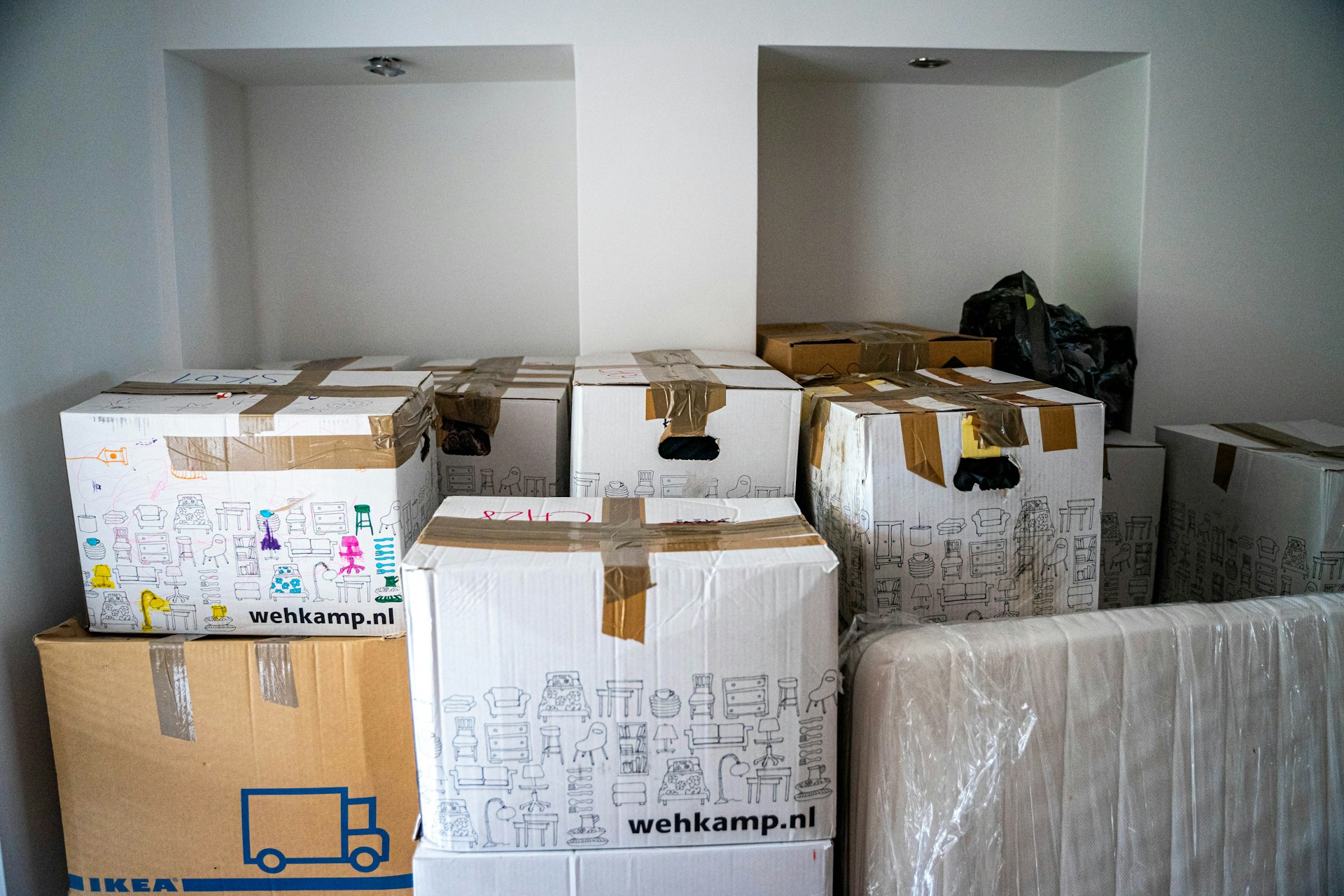
At student move-out, sort what to keep, store, sell, donate or dispose of, and start a week or two before you leave. Leave the property as you found it to protect your deposit. This guide explains your options in Southampton, from reuse schemes to council services and storage.
Move-out day in a student house always turns up the same thing: a pile of stuff nobody wants to carry. A wonky lamp, a bag of pans, a duvet that has seen better days, a bike with one tyre and a fridge magnet collection of uncertain ownership. It is easy to shove it all in the bin or leave it in the hall, but there are better options, and one of them might even help a new student.
We help students move across Southampton every year, and we see a lot of things left behind at the end of term. This guide explains what to do with things you do not want to keep at student move out: how to sort them, where to sell and donate, what the council offers, when storage makes sense and how to leave the property so you protect your deposit. It is specific to students, and our guide to unwanted furniture covers the wider picture.
Student move out: how should you sort things?
Start a week or two before you leave, and sort everything into five groups. It sounds like a lot, but it is quick if you go room by room.
- Keep: the things you will actually use next year.
- Store: things you want to keep, but will not need over the summer.
- Sell: items in good condition that someone would pay for, such as a desk lamp, a bike or small furniture.
- Donate: clean items in good condition that someone could reuse.
- Dispose: anything broken, dirty or unsafe.
Do it early, because everything else, from collections to storage, takes time. If you are sharing a house, agree with your housemates who owns what, so nothing is thrown out by mistake.
Selling and donating
Things in good condition often have a second life. There are a few routes.
- Reuse schemes. Universities and student unions often run move-out donation points. The University of Southampton and SUSU, for example, have run a pop-up donation point where clothing, kitchen items, unopened non-perishable food, bed linen, electrical items and books can be dropped off for reuse by other students, and items must be clean and in good condition. Details change each year, so check the current scheme on the University of Southampton and SUSU websites.
- Doorstep collections for private rentals. SUSU has said it works with a partner that collects a range of items from the doorstep for students in private accommodation. Check the current arrangements on the SUSU website.
- Charity shops. Many take clean clothes, books and household items, though each has its own rules, so check first.
- Online marketplaces. Small furniture, bikes and electricals can sell well, especially at the start of the academic year.
- Friends and housemates. A younger student may be glad to take over a desk or a duvet.
We have named these schemes because they are specific to Southampton students, but we have not listed opening dates or details, because they change. Check the source before you rely on them.
Council services and disposal
For items that nobody can reuse, use a proper route. Southampton City Council runs a bulky waste collection service for large household items that cannot go in the normal bins, and its Household Waste Recycling Centre, where you need to book a visit. Check the council's website for how to book, what is accepted and any charges, because we have not quoted them here.
- Do not leave things in the street or an alley, because it is fly-tipping.
- Do not pay a stranger who knocks on the door and offers to take things away. If you use a private carrier, check they are a registered waste carrier.
- Recycle what you can, such as glass, paper, cardboard and metal, in your normal bins.
- Check whether your landlord or accommodation provider has its own arrangements for leftover items.
Storing belongings over the summer
If you are coming back in September, it may make more sense to store your belongings than to take them home and bring them back again. It suits people who live far away, have a lot of things and are moving to a different house next year. We offer storage solutions, and our student storage page has more, so ask us what is available for your dates when you get a quote.
- Pack in sturdy boxes, and label them.
- Dismantle furniture where you can, to save space.
- Keep valuables, documents and anything you need over the summer with you.
- Check the terms, including how to access your things, and what is covered.
Leaving the property and protecting your deposit
The best way to protect your deposit is to leave the property as you found it, and to have the evidence. Check your tenancy agreement, and read Shelter's and GOV.UK's guidance on deposits and ending a tenancy, because the rules can change and we cannot give legal advice.
- Clean every room, including the oven, the fridge, the bathroom and the floors.
- Remove all your belongings and rubbish, including from the garden, loft and outbuildings.
- Photograph every room and any marks, with the date visible.
- Take meter readings, and photograph them.
- Hand back the keys as agreed, and get confirmation if you can.
A quick move-out plan
- Two weeks before: sort everything into keep, store, sell, donate and dispose, and book any collections.
- One week before: list what is for sale, drop off donations and book storage if you need it.
- Three days before: pack, label and clean the rooms you no longer need.
- The day before: book or confirm your van, finish the cleaning and take photos.
- Move-out day: load, do a final check of every room, read the meters and hand back the keys.
It sounds like a lot, but each step is small, and doing them in this order means you are never left doing everything on the last day.
Summary
- Sort early into keep, store, sell, donate or dispose.
- Use reuse schemes and council services.
- Store what you need after summer.
- Leave the property as you found it.
FAQs
Sort them into keep, store, sell, donate and dispose. Use reuse schemes, charity shops and council services, and start a week or two before you leave.
Sometimes. Check the current University of Southampton and SUSU move-out schemes, and the rules of any charity you use. Items must usually be clean and in good condition.
Southampton City Council has a bulky waste collection service and a household recycling centre where you book a visit. Check its website for the details and any charges.
Yes. We offer storage solutions, so ask us what is available for your dates.
Leave the property clean and as you found it, take dated photos and meter readings and check your tenancy agreement. Shelter and GOV.UK have guidance, and we cannot give legal advice.
One Last Thought
Moving out of a student house in Southampton? Call K2 Swift Removals on 023 8111 3116 or 07356 097791 and we will give you a straight, free quote.