To move a washing machine, disconnect it safely, drain the hoses, fit the transit bolts if you have them and keep it upright while carrying it with a helper or sack truck. This guide covers preparing, lifting and reconnecting a washing machine, with dishwasher tips.
A washing machine looks simple to move until you try to lift one. It weighs more than it seems, the drum is heavy, and there is a pipe full of water waiting to spill across your carpet. Get it wrong and you can damage the machine, your floor or your back.
We move households across Southampton and Hampshire, and washing machines are on almost every list. This guide explains how to move a washing machine safely, from disconnecting it to reconnecting it at the other end, with a short section on dishwashers. It is general advice. Your manufacturer's instruction manual is the final word on your model, so check it before you start.
How do you move a washing machine safely?
Disconnect it and drain it, secure the drum and the door, keep it upright while you carry it and reconnect it carefully at the new home. Work with a helper, use a sack truck if you have one and never rush the disconnection. The steps below follow that order.
Every machine is different, so follow the manufacturer's instructions on transit bolts, draining and moving. If you have lost the manual, most manufacturers publish a copy on their website, and searching for your model number usually finds it.
Disconnecting safely
Start with power and water. Switch the machine off at the socket and unplug it, and turn off the water supply taps. Then follow these steps.
- Run a short spin or drain cycle if the manual allows, to clear as much water as possible.
- Place towels and a shallow tray or bowl under the hoses.
- Disconnect the water inlet hose, and let it drain into the tray.
- Disconnect the drain hose, and lower it to let the water run out.
- Wipe the drum, the door seal and the detergent drawer, and leave the door open to dry.
If the machine is plumbed in a way you are not comfortable with, or you are not sure how to disconnect it, ask a qualified installer. We would rather you do not guess with water and electricity. Ask us, when you get a quote, exactly what our team will and will not disconnect and reconnect, so you know what to arrange yourself.
Preparing the machine for transport
Once the machine is drained and dry, it needs securing so nothing moves or breaks in transit.
- Empty the drum. Check for socks, coins and anything else, including the filter.
- Fit the transit bolts if you still have them. They lock the drum in place, and the manual will show where they go. Without them, use the manufacturer's guidance, and pad the machine carefully.
- Secure the hoses and the cable. Tape or tie them to the back of the machine so they do not swing or catch.
- Close and tape the door. Use masking tape, which is less likely to leave residue than parcel tape.
- Protect the surface. Wrap the machine in a blanket or a moving pad to avoid scratches and dents.
If you no longer have the transit bolts, do not assume the machine will be fine. Ask the manufacturer what they recommend, and be extra careful when carrying and loading.
Lifting and carrying
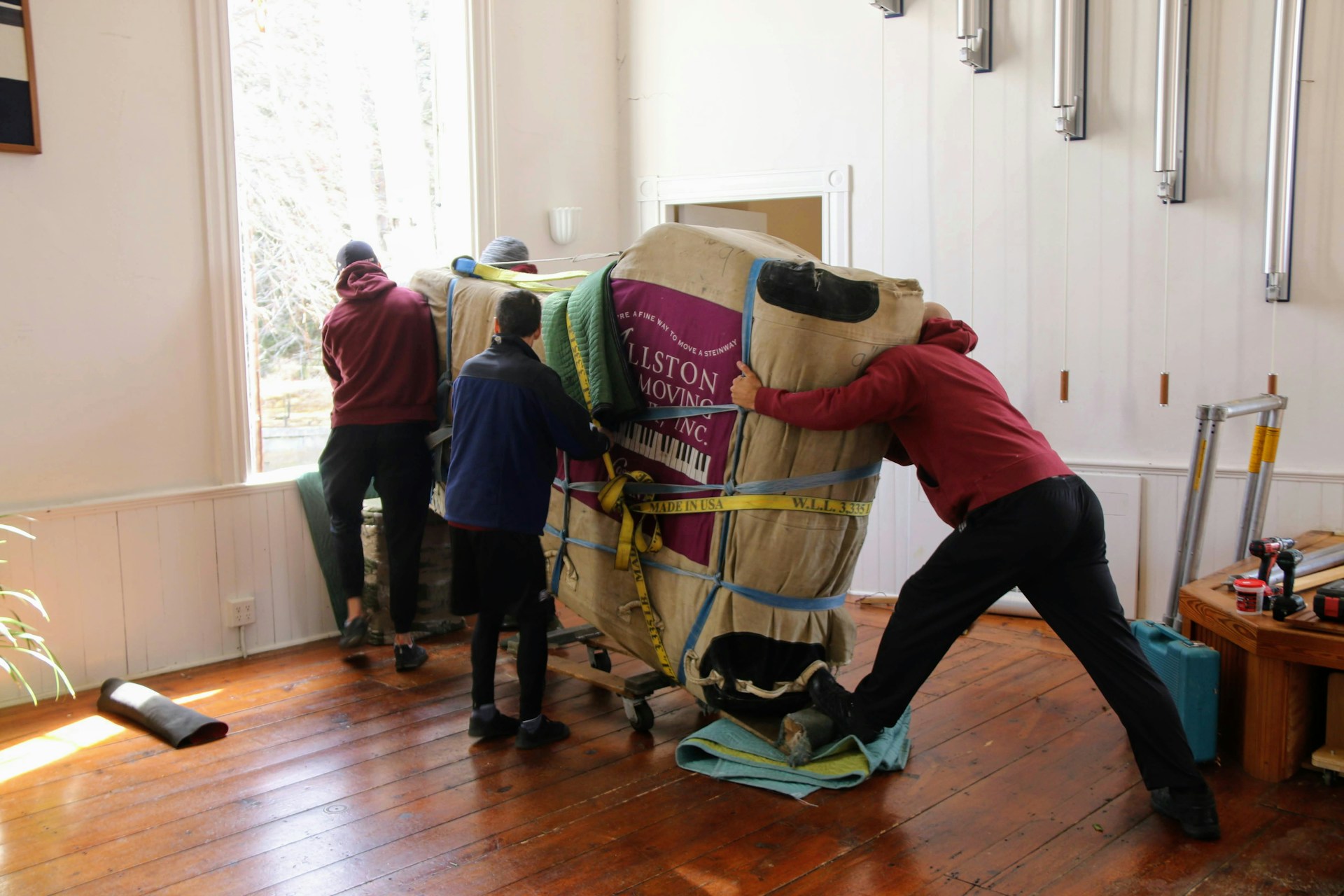
A washing machine is heavy, and it is awkward to hold. Use two people, and if you can, a sack truck with a strap. Keep the machine upright throughout, because tipping it can cause problems with the drum and the suspension, and the manual will tell you what your manufacturer says.
- Clear the route first. Measure the doorways and check for steps, corners and tight turns.
- Lift with your legs, not your back, and keep the machine close to your body.
- Take it slowly on stairs, with one person above and one below.
- Get help if you are not sure. Some machines are very heavy, and stairs in older terraced homes across Southampton make them harder.
This is a job where a removal team is often the safer option, especially if the machine is heavy, the stairs are steep or the doorways are tight. We handle bulky items as part of a house move, and tell us in advance about anything awkward so we can plan for it.
Reconnecting at the new home
At the new home, place the machine where it will live, and check it is level. Follow the manufacturer's instructions for your model.
- Position the machine, and check it is stable and level. Adjust the feet if needed.
- Remove the transit bolts, if you fitted them, as the manual instructs. Keep them for next time.
- Connect the water inlet hose and the drain hose, and check the connections are tight.
- Turn on the water, and check for leaks.
- Plug it in, and run a short cycle with no washing in it. Check again for leaks.
If you see a leak, or something does not seem right, stop and check the manual, or ask a qualified installer. It is better to lose an hour than to flood a kitchen.
Moving a dishwasher
A dishwasher follows the same principles, with a few extras. Empty it, disconnect the power and water and drain the hoses. Secure the racks and any loose parts, tape the door shut and wrap the surface. Keep it upright, and follow the manufacturer's manual for how to carry and reconnect it. If it is built into a kitchen, disconnecting it can involve pulling out worktops or plinths, so consider getting a qualified installer to do it.
Summary
- Disconnect and drain before you lift.
- Use transit bolts or padding.
- Keep it upright and use two people.
- Reconnect and check for leaks.
FAQs
Disconnect and drain it, empty the drum, fit the transit bolts or pad it well, secure the hoses and door and carry it upright with two people. Reconnect it at the new home and check for leaks. Follow your manufacturer's manual for your model.
It is best to use them, because they lock the drum in place. If you no longer have them, check the manual or ask the manufacturer what they recommend, and take extra care when carrying and loading.
Generally yes, and that is what we would do. Check your manual, because the manufacturer's instructions apply to your model.
Policies vary between companies. Ask us what our team will and will not disconnect and reconnect when you get your quote, so you know what to arrange yourself. For plumbing or electrical work, a qualified installer is the safer choice.
The same way as a washing machine: disconnect and drain, empty and secure the racks and door, and keep it upright. If it is built in, ask a qualified installer to disconnect it.
One Last Thought
Moving house in Southampton or Hampshire? Call K2 Swift Removals on 023 8111 3116 or 07356 097791 and we will give you a straight, free quote.